
Good practices
Home composting
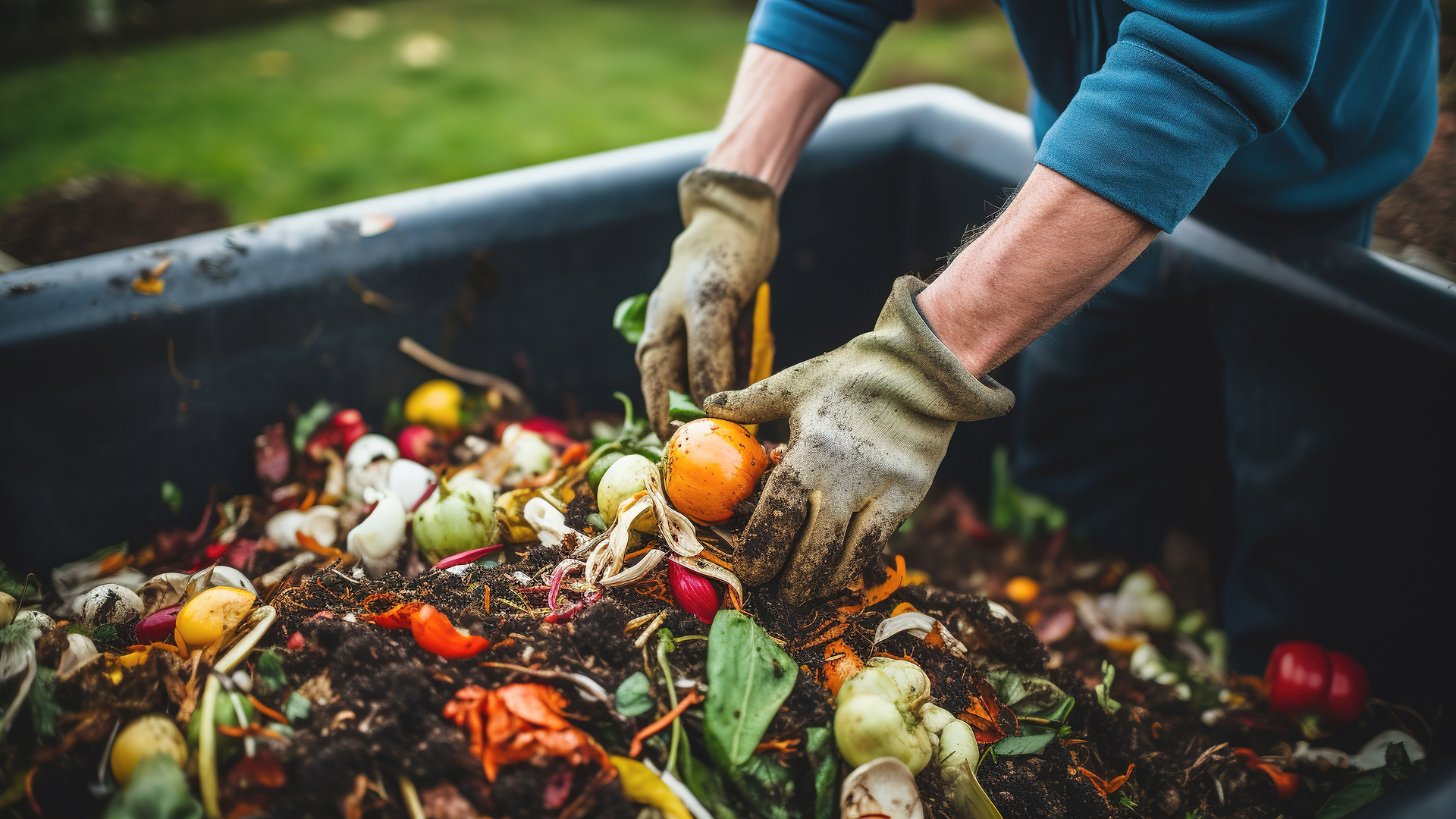
Home composting is a natural practice that transforms organic waste from the kitchen or garden into a fertile soil, very similar to humus, known as compost.
Why do it?
Sustainability
Thanks to home composting, waste is reduced by more than 30%.
Naturalness
Compost is an excellent natural fertiliser produced through a simple biological process
Personal satisfaction
By using only your own kitchen or garden waste, you can produce compost that is perfect for your vegetable garden and flowers—bringing benefits both to you and to the environment!
If you wish, you can use the compost bin provided free of charge by your local council by filling in the application form available at this link. Alternatively, you can build one yourself using old pallets, or purchase one, choosing the size, shape and colour you prefer.
Be careful where you place your compost bin: choose the location carefully, as it must be:
- Shaded
Without direct light
- Well-drained
Choose a base where water does not stagnate
- Well-ventilated
Remember that the composting process requires the material to be turned regularly: at least once every 25–30 days, with 2–3 turnings during a full “fermentation” cycle. It is also important to ensure that there is not too much water, which would trigger rotting, and not too little, which would slow down the process.


